
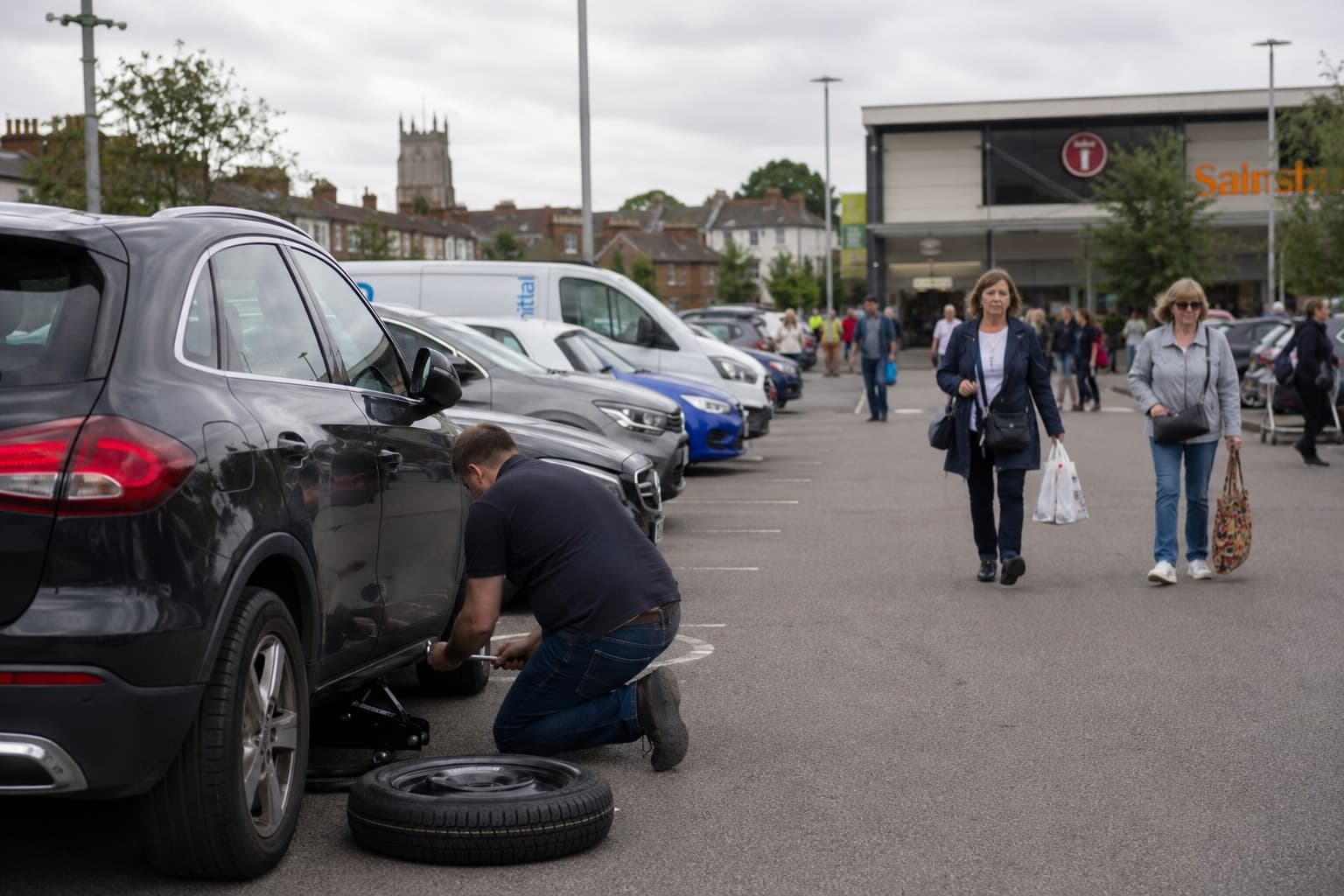
Last Saturday I pulled into the car park in our local town with my wife and the kids. As we parked up, I clocked a bloke crouched by his car with a foot pump, trying to get air into a back tyre that was as flat as a tyre gets. I happened to have an electric pump in the boot. So instead of heading straight off into town, I wandered over and offered to hook it up for him.
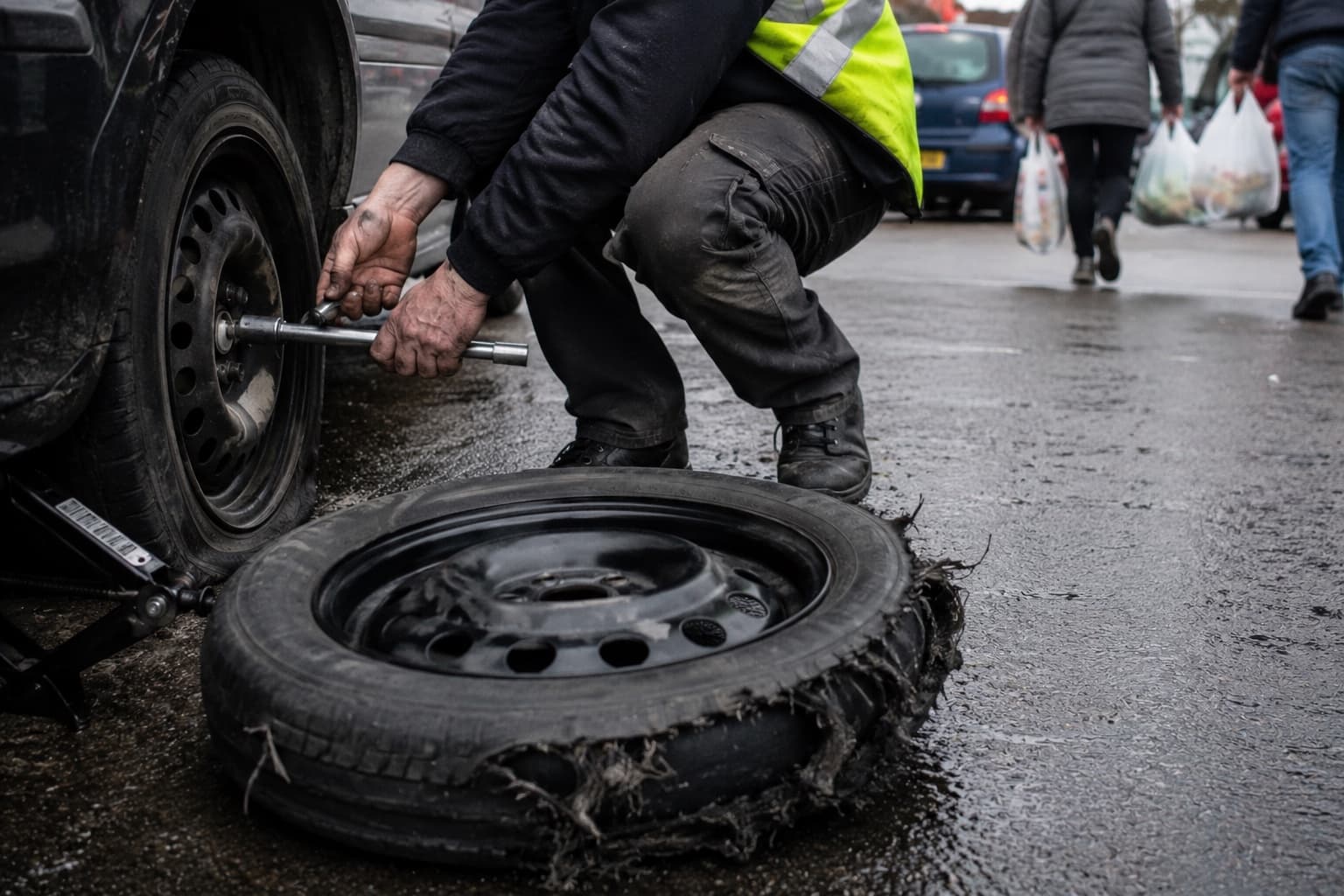
It didn't take long to see the tyre was finished — pretty much shredded at the back. So I offered to help him change it. He said he'd be glad of a hand, and between us we got his space-saver on. I washed the muck off my hands and went to find my family. Ten minutes, start to finish.
Here's the part that stuck with me, though. It was a busy Saturday and that car park was packed. And in all the time he'd been knelt there with a dead tyre, not one other person had stopped. Plenty walked straight past. He wasn't helpless — he'd have sorted it out eventually — but that isn't really the point. Lending a hand is just the decent thing to do. On a full car park, the number of people who did was one.
There's an old phrase for the thing that was in short supply that morning: actions speak louder than words. Service is just love you can actually see — love with its sleeves rolled up. It has gone a bit quiet lately, drowned out by a world that rewards saying over doing. But look hard at almost anything good around here and you'll find it underneath, holding the whole thing up.
Whatever you did for one of the least of these brothers and sisters of mine, you did for me.— Matthew 25:40
The same idea, in three places
Start with the country. A nation isn't really held together by speeches or by the people who make them. It's held together by service — the squaddie and the nurse, yes, but also the Sunday-league gaffer, the dinner lady, the retained firefighter, the volunteer who runs the food bank and the one who keeps the cricket club going. None of it makes the news. All of it is the actual load-bearing structure. A country is just the sum of how much its people are willing to do for one another.
Then there's faith. Jesus, the figure at the centre of our country's churches for a thousand years, knelt down and washed his friends' feet, and said he came not to be served but to serve. That isn't a footnote to British culture — for most of our history it was the spine of it. Whatever you believe, that's the picture of goodness we inherited: not the loudest in the room, but the one quietly doing the lowest job for the people around them.
And then there's simply being a decent person — service at the size of a street. The lift you give. The shopping you drop round. The hour you sit with someone who's struggling. The casserole left on a doorstep after a funeral. Nobody films it, nobody praises it, there's no medal. But it's the same thing the nurse and the saint are doing, scaled down to something a normal person can carry on a Tuesday.
An age of opinions, short on deeds
Be honest about the water we're swimming in. We have never had more opinions about the country and never done less for the street. That car park was full of people who, I'd wager, have plenty to say about the state of the nation; what it actually needed for ten minutes was someone with a pump. The feed rewards the take, not the task — it pays you in attention for saying the right thing and nothing at all for doing a quiet, useful one. It's not that people have got worse. It's that we built a culture that forgot how to praise the casserole and the cleared verge, and a place that forgets that always ends up feeling thin and a little lonely, however rich it gets.
You feel the absence of it. The nagging sense that something's missing isn't really about politics. It's that we used to belong to things that asked something of us — a parish, a club, a street, a town — and we quietly stopped showing up. Take away the doing and you don't get freedom. You get strangers living next to strangers, all with strong views and nobody to lend a ladder.
It's also how a town gets rebuilt
Here's the hopeful part, and it's why we built this. You don't need a grand gesture. The small act of service is available to every one of us, this week. Learn your neighbours' names. Turn up to the litter pick. Give one evening a month to the place you're from. A town is nothing more mysterious than thousands of those small acts of service stacked on top of each other — and it falls apart for nothing more mysterious than people deciding it's somebody else's job.
That's really the whole bet behind a hub. Not slogans — just ordinary people willing to do something useful for the place they live, on purpose, and keep doing it. Proud, lawful, and in it for the long haul. Don't tell the world you love your country. Show your street.
Find your town. See if it has a hub. And if it doesn't — that's the thing worth giving an evening to.
— The Patriot Hub team